What is Apollo Group TV (Apollo Group IPTV)?
Apollo Group TV is a subscription-based IPTV service that delivers live television channels and on-demand entertainment through the internet rather than traditional cable or satellite. Instead of relying on a physical TV provider or satellite dish, users stream content through compatible apps on devices such as Firestick, Android TV boxes, smartphones, smart TVs, or laptops. The service aggregates a large selection of international TV channels, sports broadcasts, and video-on-demand libraries into one interface that can be accessed from almost anywhere with a stable internet connection.
In practical terms, this means viewers open a streaming app, sign in with their subscription details, and instantly browse a TV-style channel guide or a catalog of movies and series. Many IPTV services provide an electronic program guide (EPG), which resembles the familiar cable TV schedule layout and makes it easy to jump between channels. For example, a user in Europe might watch international sports channels on a Fire TV Stick in the evening, then switch to movies on a tablet later without needing a separate TV subscription. The experience feels similar to traditional television, but it runs entirely through internet streaming.
What often confuses new users is the terminology. “Apollo Group TV” is the brand or service name, while “IPTV” refers to the technology behind it—Internet Protocol Television. IPTV simply means TV delivered via internet data rather than broadcast signals. Because of this, the same account can often work across multiple devices and apps, provided the user logs in with the correct credentials. Many people access the service through IPTV player apps such as TiviMate or IPTV Smarters, which organize channels and video libraries into a clean interface designed for remote control navigation.
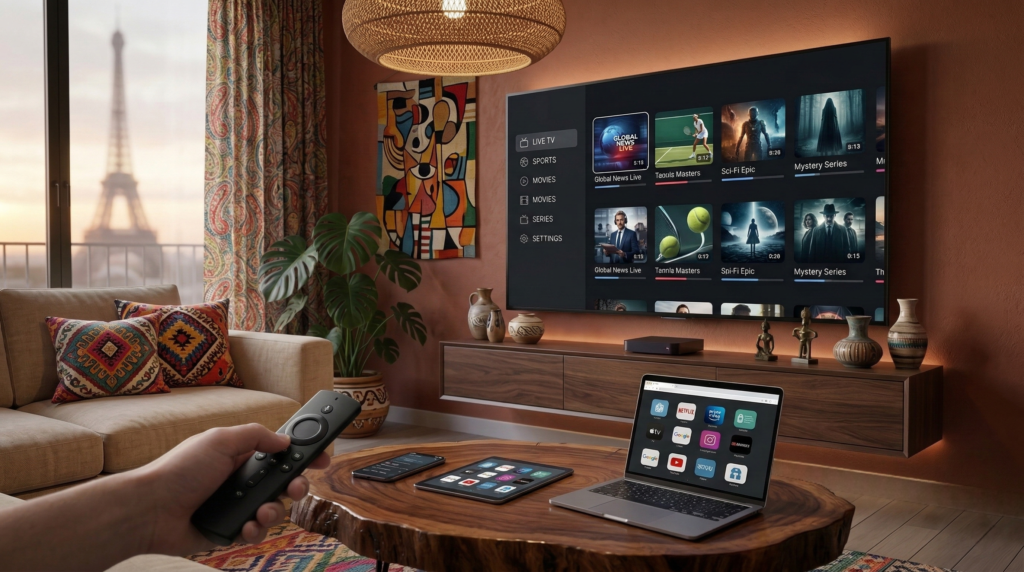
For everyday users, the main appeal is convenience and flexibility. Instead of juggling several streaming subscriptions and live TV packages, IPTV services combine different types of content into one system. As shown above, the setup typically centers around a streaming device and a compatible player app that loads channels and media libraries automatically after login. However, before choosing a service, it’s important to understand device compatibility, connection limits, and how plans are structured so the experience remains smooth across your household.
Quick takeaway:
- IPTV streams television through the internet instead of cable or satellite.
- Users typically watch through apps on devices like Firestick, smart TVs, phones, or laptops.
- A single subscription can often be used across multiple supported devices depending on the plan.
How Apollo Group TV works for streaming TV
Streaming TV through IPTV works by delivering television channels and video content over the internet instead of traditional broadcast infrastructure. When a user subscribes to a service like Apollo Group TV, they receive login credentials that connect a compatible app or IPTV player to a remote streaming server. Once connected, the app loads a list of available live channels, movies, and series, allowing viewers to watch content instantly on their device without downloading files or using cable hardware.
In everyday use, the process is straightforward. A viewer installs a streaming app on a device such as a Firestick, Android TV box, smart TV, smartphone, or computer. After entering their account details into the app, the software retrieves the channel list and electronic program guide from the server. From that moment, the device functions like a digital television hub: users can browse channels, open sports broadcasts, or switch to on-demand movies with a remote or touchscreen. Because the content streams directly through the internet, the experience depends mainly on connection quality and device performance.
A typical viewing scenario might look like this: someone opens an IPTV player on a Fire TV Stick connected to their living-room television. The interface displays categories such as live sports, news channels, and entertainment networks. The user selects a channel from the program guide, and the stream begins almost immediately. Later, the same account might be used on a tablet or phone to continue watching a movie from the video-on-demand library. This flexibility is one reason IPTV services are often used across multiple devices within the same household.
To get the best streaming experience, users usually consider three practical factors before starting: device compatibility, internet speed, and the IPTV player app being used. Modern IPTV apps such as TiviMate or IPTV Smarters organize channels into categories and allow features like favorites lists, subtitles, and electronic program guides. A stable home internet connection—typically at least 20–30 Mbps for HD streaming—helps prevent buffering and ensures that live channels load quickly. When these pieces work together, streaming TV through IPTV feels very similar to browsing traditional cable channels, but with more flexibility in how and where you watch.
Quick takeaway:
- IPTV streams television channels and on-demand media through internet connections instead of cable signals.
- Users log into a compatible app that loads channels and program guides from a streaming server.
- Device compatibility, app choice, and internet speed strongly influence viewing quality.
Why many European users search for Apollo Group IPTV
Many European users search for IPTV services because they want a simpler way to watch international television, sports broadcasts, and on-demand entertainment without relying on multiple traditional TV subscriptions. Internet-based TV platforms allow viewers to access a wide range of channels and streaming content from a single interface, often across several devices in the same household. This flexibility is especially attractive for people who want both live television and streaming libraries without switching between different apps or providers.
Another common reason is access to international content. Europe has a diverse population with many viewers who prefer programming from other countries—whether that’s sports leagues, regional news channels, or entertainment from their home country. IPTV services can make it easier to browse channels from different regions within one channel guide. For example, someone living in France might want to follow international sports events, watch English-language movies, and occasionally access TV channels from another country. Instead of installing separate streaming services for each type of content, IPTV platforms combine these options in one place.
Device compatibility also plays a major role in why people search for services like Apollo Group IPTV. Modern viewers rarely watch television on a single device. A typical household might use a smart TV in the living room, a Fire TV Stick in another room, and smartphones or tablets when traveling. IPTV services are designed to work through apps on these devices, which means viewers can sign in and watch their preferred channels wherever they are. For many users, this convenience—combined with a familiar TV-style channel guide—makes IPTV easier to use than managing several standalone streaming platforms.
Finally, cost transparency and subscription flexibility are another factor driving interest. Traditional TV packages in parts of Europe can involve long-term contracts or bundles that include channels people rarely watch. IPTV subscriptions often work on a simpler model where users choose a plan based on duration and number of device connections. Before subscribing, many viewers compare available features, device compatibility, and plan options to determine whether the service fits their viewing habits and household setup.
Quick takeaway:
- Many European viewers search for IPTV because it combines live TV and streaming content in one place.
- International channel access and sports coverage are common motivations.
- Multi-device compatibility makes IPTV convenient for modern viewing habits.
What you get with Apollo Group TV
Apollo Group TV provides a complete IPTV-style streaming experience that combines live television channels, sports broadcasts, and on-demand entertainment within a single platform. Instead of switching between several apps or subscriptions, users can browse live TV, explore movie libraries, and access international programming through one interface. After logging in through a compatible streaming app, the service loads a structured channel guide and media categories that function much like a modern digital TV system.
One of the main advantages is the variety of content available in one place. Viewers typically find live channels covering news, sports, entertainment, and international programming, alongside a large video-on-demand library containing movies and series. For example, a household might watch live football in the evening through the channel guide, then switch to a movie from the VOD section later in the night without leaving the same app. This unified structure is particularly useful for families or shared households where different people want different types of content.
Another feature many users value is the familiar TV-style navigation. Most IPTV players display an electronic program guide (EPG) that shows what is currently playing and what will air next, similar to traditional cable TV menus. Channels can usually be sorted into categories such as sports, entertainment, kids’ programming, or regional channels, making it easier to browse large channel lists. Many apps also allow users to mark favorite channels, adjust subtitles or audio tracks, and resume recently watched content.
The experience also adapts well to modern viewing habits. Streaming through IPTV apps means the same account can often be used across multiple devices, such as a smart TV in the living room, a Fire TV Stick in another room, or a tablet while traveling. As a result, users gain a flexible way to watch both live television and on-demand content without relying on a traditional cable provider. When evaluating whether the service fits your needs, it’s helpful to consider the number of devices you plan to use, the type of content you watch most often, and whether the available channel categories match your preferences.
Quick takeaway:
- IPTV platforms combine live TV channels and on-demand content in one interface.
- Electronic program guides and categorized channels make navigation similar to cable TV.
- Multi-device compatibility allows viewing on TVs, phones, tablets, and streaming boxes.
Live TV channels and international content
One of the main reasons people use IPTV services is access to a wide range of live TV channels and international programming in a single place. Instead of switching between several streaming apps or regional TV packages, users can browse hundreds or even thousands of channels through one electronic program guide. This setup makes it possible to watch news, sports, entertainment, and regional television from multiple countries using the same streaming interface.
For many viewers in Europe, international content is a major advantage. People often want access to channels from different regions—whether that means English-language entertainment, European sports networks, or television from their home country. With IPTV platforms, these channels are typically organized into categories such as sports, movies, news, kids, or regional groups. For example, a user in Germany might open a channel guide and quickly switch between UK sports coverage, European news channels, and international movie networks without leaving the app.
The viewing experience also closely resembles traditional cable television thanks to the electronic program guide. Instead of searching for individual streams, users scroll through a schedule that shows what is currently playing and what comes next. This makes it easy to discover live events, such as football matches, breaking news coverage, or live entertainment shows. Many IPTV apps also allow viewers to mark favorite channels, making frequently watched content easier to access on a daily basis.
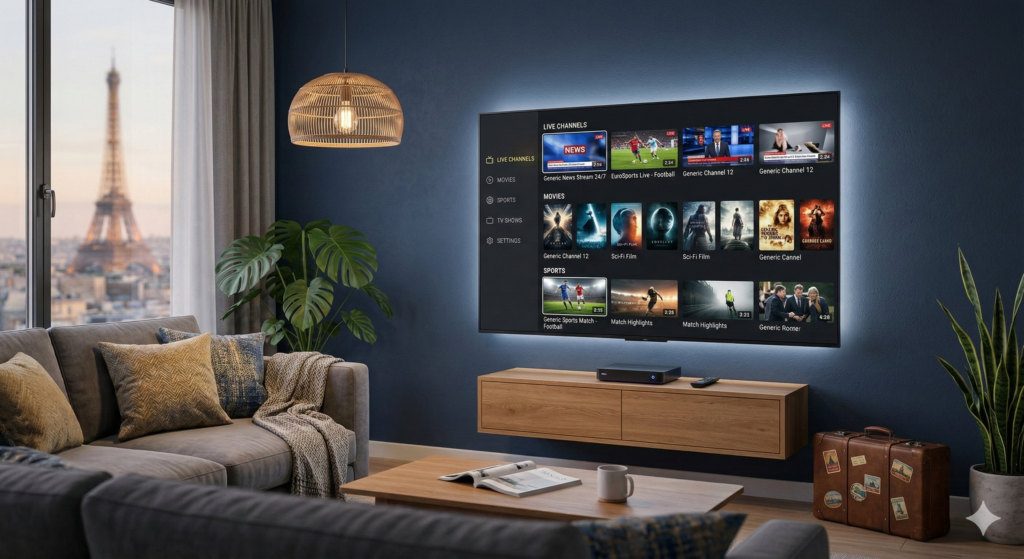
As shown in the interface above, channel categories and live program listings make navigation simple even when a service offers a large number of channels. For the best experience, users often check a few practical points before subscribing: whether the channel categories match their interests, whether the program guide loads properly in their IPTV player app, and whether the streaming quality remains stable on their internet connection. Taking a few minutes to test these aspects can help ensure that the service delivers the type of live TV and international programming a household actually wants to watch.
Quick takeaway:
- IPTV services provide live TV channels from multiple countries in one interface.
- Electronic program guides make browsing channels similar to cable television.
- International channel categories help viewers quickly find sports, news, or regional programming.
Movies and series on demand (VOD)
Video on demand (VOD) allows viewers to watch movies and TV series whenever they want rather than waiting for a scheduled broadcast. Within IPTV platforms, the VOD section works like a built-in streaming library where users can browse films, television series, and sometimes documentaries directly from the same interface used for live channels. After selecting a title, the content starts instantly, similar to how mainstream streaming services operate, but without leaving the IPTV player.
For many users, the VOD library becomes the part of the platform they use most often. Instead of checking a TV schedule, viewers simply open the movies or series section and choose what to watch. A typical evening scenario might involve opening the streaming app on a smart TV, browsing through the latest movie categories, and starting a film within seconds. If another family member wants to watch a series later, they can open the same VOD section and continue from the next episode without needing a separate account or application.
Most IPTV apps organize the VOD library into categories that make browsing easier. Movies are often sorted by genre, release year, or popularity, while TV shows appear in series format with individual seasons and episodes. Many IPTV players also display cover artwork, short descriptions, and playback controls such as pause, resume, and subtitles. As shown in the interface above, this layout makes the experience feel similar to dedicated streaming platforms while keeping everything inside one app alongside live television channels.
Before relying heavily on the VOD section, it helps to check a few practical details. Users often look at how quickly titles load, whether subtitles and language options are available, and how well the playback quality performs on their device. Internet speed and the IPTV player being used can influence streaming stability, especially for high-definition content. Testing a few movies or episodes early on can help determine whether the service fits your viewing habits and whether the available library matches the types of films and series you typically watch.
Quick takeaway:
- VOD allows users to watch movies and TV series anytime without a broadcast schedule.
- IPTV apps organize films and shows into categories similar to modern streaming platforms.
- Playback quality and subtitle support are important factors to test before regular use.
Key features users look for: EPG, HD streaming, multi-device
When choosing an IPTV service, most users focus on three practical features: a reliable electronic program guide (EPG), consistent HD streaming quality, and the ability to watch across multiple devices. These elements strongly influence whether the experience feels smooth and convenient or frustrating to use. While channel numbers and content categories matter, everyday usability often depends on how well these core features work together inside the streaming app.
The electronic program guide is one of the most important tools for navigating live television. Instead of manually searching for streams, the EPG presents channels in a grid that shows what is currently playing and what will air next. This layout closely resembles traditional cable TV guides, which makes it intuitive even for non-technical users. For example, someone watching sports can quickly scroll through the guide to see upcoming matches, while another viewer might browse evening movies scheduled on entertainment channels. Many IPTV player apps also allow users to filter channels, mark favorites, and jump directly to specific time slots within the guide.
Streaming quality is another major factor viewers consider. Most modern IPTV services offer high-definition streams, and in some cases even higher resolutions depending on the source channel and the user’s internet connection. Stable HD playback makes live sports, movies, and TV shows much more enjoyable, especially on larger screens like smart TVs. However, quality can depend on both the streaming server and the user’s home network. A stable broadband connection and a capable device—such as a Fire TV Stick, Android TV box, or recent smart TV—usually help maintain smooth playback with minimal buffering.
Multi-device access is the third feature that many households expect. Instead of limiting viewing to a single television, IPTV accounts can often be used across several devices depending on the subscription plan. For example, one person might watch live TV on the living-room television while another continues a series episode on a tablet or smartphone. This flexibility allows viewers to switch devices easily without losing access to the same channel lists and VOD libraries. Before subscribing, it’s useful to check how many simultaneous connections are allowed so the service matches how many people in the household plan to watch at the same time.
Quick takeaway:
Multi-device access allows households to watch content on different screens.
An electronic program guide helps users browse live channels easily.
HD streaming quality improves the viewing experience on modern TVs and devices.
Devices compatible with Apollo Group IPTV
Apollo Group IPTV can be accessed on a wide range of modern streaming devices, which is one of the main reasons many users consider IPTV instead of traditional TV services. Because the platform works through internet-based apps rather than dedicated hardware, viewers can watch live channels and on-demand content on smart TVs, streaming sticks, smartphones, tablets, and computers. This flexibility allows households to watch the same service in different rooms or while traveling, using devices they already own.
One of the most popular ways people access IPTV is through streaming devices connected to a television. Devices such as Amazon Fire TV Stick or Android TV boxes are commonly used because they support IPTV player apps that load channel lists, electronic program guides, and VOD libraries smoothly. For example, a user might connect a Firestick to their living room TV, install an IPTV player like TiviMate, and log in with their account credentials. Within minutes, the interface displays live channels, sports categories, and movie libraries similar to a cable TV menu.
Smartphones and tablets also provide convenient access to IPTV content. Many viewers use Android or iOS devices when they are away from home or when the main television is in use. By opening the same IPTV player app on a mobile device, users can browse channels, watch live broadcasts, or stream movies from the VOD section. This approach works particularly well for casual viewing—such as catching up on a sports event while commuting or watching a series episode on a tablet in another room.
As illustrated above, IPTV platforms are designed to work across multiple types of devices so users are not limited to one screen. Smart TVs with Android TV systems, laptops, and desktop computers can also run IPTV players that connect to the same account. When choosing a device, users often consider factors such as remote-control navigation, app compatibility, and streaming performance. In many cases, a simple streaming stick or Android TV box offers the most straightforward setup for watching live TV and movies on a larger screen.
Quick takeaway:
- IPTV services work on streaming sticks, smart TVs, phones, tablets, and computers.
- Fire TV and Android TV devices are commonly used for simple living-room setups.
- Multi-device compatibility allows viewers to watch the same service on different screens.
Firestick and Android TV
Firestick and Android TV devices are among the most common ways people watch IPTV on a television. These platforms are widely used because they support dedicated IPTV player apps, provide smooth streaming performance, and are easy to control with a remote. When connected to a TV, devices like the Amazon Fire TV Stick or an Android TV box transform a standard television into a full streaming hub capable of playing live channels, sports broadcasts, and video-on-demand content.
Many households prefer Firestick because of its simple setup and compact design. After plugging the device into a TV’s HDMI port and connecting it to Wi-Fi, users can install an IPTV player app and sign in with their service credentials. Once the login details are entered, the app loads the channel list and program guide automatically. From there, viewers can navigate categories, select live channels, or open the VOD section using the remote control, much like browsing traditional cable television.
Android TV devices work in a similar way but often provide additional flexibility. Smart TVs running Android TV or dedicated Android TV boxes allow users to install IPTV player apps directly from the device’s app store. These apps organize channels into categories, display electronic program guides, and manage movie or series libraries. For example, someone using an Android TV box might open their IPTV player, browse the sports category, and immediately start watching a live match in HD without switching between multiple streaming platforms.
As illustrated in the setup example above, both Firestick and Android TV devices are designed to deliver a smooth IPTV viewing experience on a large screen. When deciding between the two, users usually consider factors such as remote usability, app availability, and overall system performance. A streaming stick like Fire TV is often ideal for simple plug-and-play setups, while Android TV boxes may offer more customization and storage for apps. In most cases, either option works well for watching IPTV channels and on-demand content from the comfort of a living room.
Quick takeaway:
- Firestick and Android TV devices are popular for watching IPTV on a television.
- IPTV apps load channels, program guides, and VOD libraries directly on these devices.
- Fire TV is simple to set up, while Android TV often offers more customization options.
Smart TVs and streaming boxes
Smart TVs and streaming boxes provide another straightforward way to watch IPTV on a larger screen without relying on traditional cable equipment. Many modern televisions include built-in operating systems such as Android TV, Google TV, or similar smart platforms that support streaming applications. This means users can install an IPTV player directly on the TV, sign in with their account credentials, and begin browsing live channels or on-demand content without adding extra hardware.
For households that already own a compatible smart TV, the setup process is often very simple. After connecting the television to Wi-Fi, users can open the device’s app store and install an IPTV player app designed for smart TV interfaces. Once login details are entered, the application loads the channel list and electronic program guide. From there, viewers can navigate channels using the TV remote just like they would with a cable provider, switching between news, sports, entertainment, or movie categories within seconds.
Streaming boxes offer a similar experience but with a bit more flexibility. Devices such as Android TV boxes or other media players connect to the television through an HDMI port and provide their own operating system and app ecosystem. These devices are often used when a TV’s built-in software is limited or outdated. For example, a user might connect a streaming box to an older smart TV to access IPTV apps that are not available on the television itself. This approach can improve performance and provide access to additional apps or features.
As suggested in the setup example above, both smart TVs and streaming boxes allow viewers to create a comfortable living-room viewing environment. When choosing between them, users often consider factors such as app availability, system updates, and remote control navigation. A newer smart TV may handle IPTV apps smoothly on its own, while a dedicated streaming box can offer better performance and longer software support. Either option can provide a reliable way to watch live channels and video-on-demand content from the same interface.
Quick takeaway:
- Smart TVs can run IPTV apps directly without additional hardware.
- Streaming boxes add flexibility and can improve performance on older televisions.
- Both options allow viewers to watch live channels and VOD content on a large screen.
iPhone, iPad, and computers
iPhone, iPad, and computers offer a convenient way to watch IPTV content without needing a dedicated TV device. Instead of connecting a streaming stick or box, users can access live channels and on-demand libraries directly through compatible apps or desktop players. This flexibility makes it easy to watch television while traveling, working on a laptop, or simply when the main television in the house is being used by someone else.
On Apple devices such as the iPhone or iPad, IPTV viewing typically works through specialized player applications available in the App Store. After installing the app, users enter their account credentials or playlist information, which loads the available channels and video-on-demand library. The interface is optimized for touch navigation, allowing viewers to browse categories, open channels, or start a movie within seconds. For example, someone commuting by train might open the app to watch a live sports broadcast, then continue browsing the VOD library later at home.
Computers provide another practical option for IPTV streaming, particularly for people who spend a lot of time working on laptops or desktops. Many users access IPTV through desktop player software or browser-compatible players that display channel lists and electronic program guides. The layout is similar to what appears on a television-based IPTV app, with channel categories on one side and the live stream or movie playback window in the center. This setup works well for multitasking—for instance, watching news or sports on a second screen while using a computer for work.
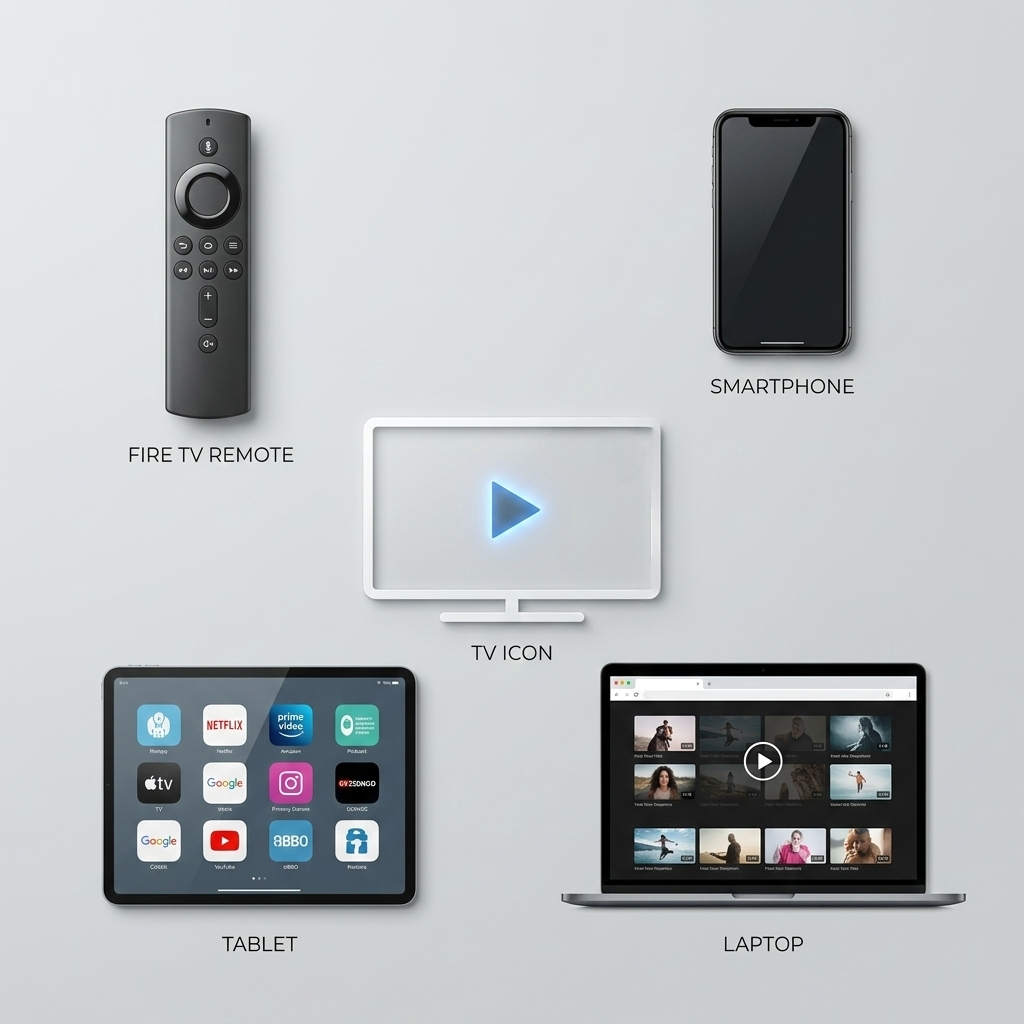
As suggested in the device overview above, mobile devices and computers are often used as secondary viewing options rather than the main television screen. They are ideal for portability and quick access, but users usually prefer a smart TV or streaming device for longer viewing sessions. When setting up IPTV on mobile or desktop devices, it helps to check that the chosen player app supports stable playback, subtitle options, and an easy-to-read channel guide so navigation remains simple even on smaller screens.
Quick takeaway:
- iPhone and iPad allow IPTV viewing through compatible player apps.
- Laptops and desktop computers can stream live channels through desktop players or browser-based interfaces.
- Mobile devices are ideal for portable viewing when a TV is not available.
How to set up Apollo Group TV
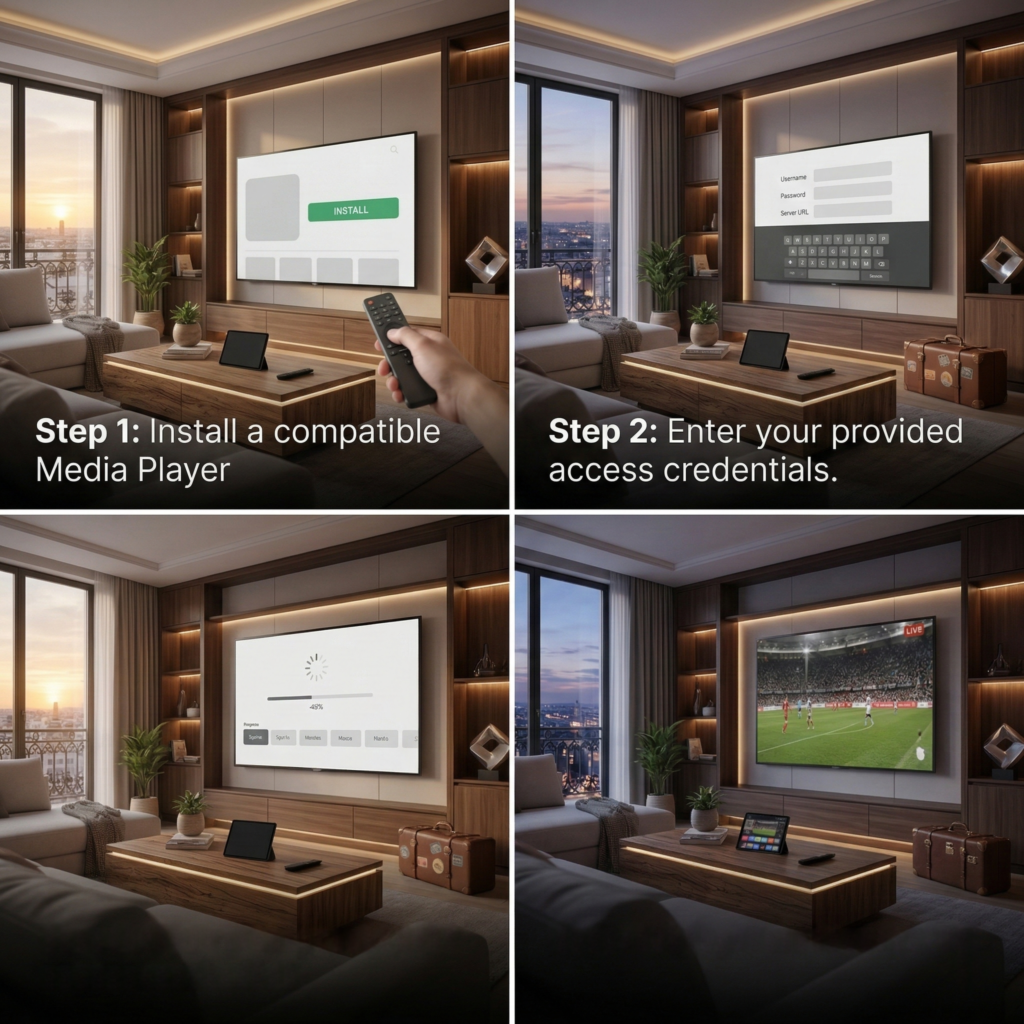
Setting up Apollo Group TV is generally a quick process that involves installing a compatible IPTV player, entering your account credentials, and loading the channel list inside the app. Unlike traditional TV services that require cable boxes or technician visits, IPTV setup typically happens entirely through software on a streaming device, smart TV, phone, or computer. Once the correct login details are entered, the application connects to the streaming server and automatically loads live channels, program guides, and video-on-demand libraries.
The first step is choosing the device you plan to watch on. Many users prefer streaming devices such as Fire TV Stick or Android TV boxes because they provide a simple interface for navigating channels with a remote control. Others may install IPTV player apps directly on smart TVs, tablets, or smartphones. After installing the player app, users enter their login credentials or playlist details provided during subscription. Within a few seconds, the application usually downloads the channel list and organizes it into categories such as sports, news, entertainment, and movies.
In practical terms, the process often looks like this: a user connects their streaming device to the television, installs an IPTV player from the app store or trusted source, and opens the app for the first time. The login screen asks for a username, password, and sometimes a server or portal URL. After entering this information, the player synchronizes with the IPTV service and loads the electronic program guide. From that moment, the interface behaves like a digital TV system where viewers can scroll through channels, start live broadcasts, or open the VOD section to watch movies and series.
As shown in the setup example above, most IPTV installations take only a few minutes once the correct app and credentials are available. To ensure a smooth experience, users usually check a few things before starting: a stable internet connection, a compatible IPTV player, and a device capable of streaming HD content. Testing a few channels and movies after setup can confirm that playback works properly and that the program guide loads correctly. Once everything is configured, the service can be used on the device just like a regular TV platform.
Quick takeaway:
A stable internet connection and compatible IPTV player help ensure smooth playback.
IPTV setup typically involves installing a player app and entering login credentials.
Streaming devices, smart TVs, phones, and computers can all be used for setup.
Basic setup steps for most devices
The basic setup process for IPTV is similar across most devices and usually takes only a few minutes once you have your login details. Whether you are using a Fire TV Stick, Android TV box, smart TV, smartphone, or computer, the core steps remain almost the same: install a compatible IPTV player app, enter your account credentials, and allow the app to load the channel list and program guide. Once these steps are completed, the device functions like a digital television interface where you can browse live channels and on-demand content.
The first step is installing an IPTV player on your device. On streaming devices and smart TVs, this typically means opening the device’s app store and downloading a player designed for IPTV streaming. Mobile users can install similar apps from their device’s application store, while computer users may rely on desktop players or browser-based platforms. After installation, the app acts as the interface that connects your device to the IPTV service and organizes the available channels and media libraries.
The next step involves entering your account credentials inside the IPTV player. Most apps request a username and password, and sometimes a server or portal address depending on the login method used by the service. Once this information is entered correctly, the player connects to the streaming server and downloads the channel list along with the electronic program guide. At that point, the interface usually displays channel categories such as sports, movies, news, and entertainment, allowing users to begin browsing immediately.
As illustrated in the setup example above, the final step is testing the connection to make sure everything loads properly. Users typically open a few live channels, check that the program guide displays correctly, and try playing a movie from the VOD library. If streams start quickly and playback remains stable, the setup is complete. Taking a few minutes to organize favorite channels or adjust subtitle settings can also make everyday viewing more convenient, especially when using the service across multiple devices in the same household.
Quick takeaway:
- Install a compatible IPTV player on your device.
- Enter login credentials to load channels and the program guide.
- Test a few streams to confirm playback works smoothly.
Using IPTV apps to access the service
IPTV apps are the software tools that allow users to access and organize live channels, program guides, and on-demand libraries on their devices. Instead of streaming directly through a website, most IPTV services work through dedicated player applications that connect to the service using login credentials or playlist details. Once connected, the app loads the available channels and media categories, creating a structured interface that looks similar to a modern digital TV system.
These apps are designed to work across many types of devices, including streaming sticks, Android TV systems, smartphones, tablets, and computers. After installing the player app, users typically log in with their account information, which allows the app to retrieve the channel list and electronic program guide from the streaming server. For example, someone using a Fire TV Stick might install an IPTV player, enter their login details, and instantly see categories for sports, movies, and international channels appear inside the interface.
The main advantage of IPTV apps is that they organize large channel libraries into a simple and easy-to-navigate layout. Instead of searching for individual streams, users can browse a structured guide that displays what is currently playing and what will air next. Many IPTV players also include features such as favorite channel lists, subtitle controls, playback settings, and quick navigation between live TV and video-on-demand libraries. As shown in the interface example above, this structure helps viewers move between channels or media categories quickly using a remote control or touchscreen.
When choosing an IPTV app, users often look for reliability, compatibility with their device, and a clean interface that makes channel navigation easy. Some apps prioritize advanced features like customizable channel groups or recording options, while others focus on simplicity for casual viewers. Testing the interface with a few channels and movies after login is usually the best way to confirm that the player works well with your device and internet connection before using it regularly.
Quick takeaway:
- IPTV apps act as the interface that connects your device to the streaming service.
- They organize channels, program guides, and VOD libraries into an easy-to-browse layout.
- Choosing a stable and compatible player improves overall streaming performance.
Where to enter login details
Login details are entered directly inside the IPTV player app that you install on your device. After opening the app for the first time, it typically displays a login screen asking for a username, password, and sometimes a server or portal URL depending on the login method used. Once these details are entered correctly, the app connects to the streaming server and loads the available channel list, electronic program guide, and video-on-demand library.
The exact location of the login screen depends on the IPTV player you are using, but the process is usually straightforward. Most apps show an “Add playlist,” “Add user,” or “Login with credentials” option when the app launches for the first time. After selecting this option, a simple form appears where you enter the login information provided during subscription. For example, someone using a streaming device in their living room might install an IPTV player, open the app, select “Add new account,” and then type in the username and password using the remote control.
In some cases, the app may offer different login methods. One option may ask for a username and password, while another might request a playlist or portal address. Both methods allow the IPTV player to retrieve channel lists and program guides from the service’s servers. Once the correct information is entered, the app synchronizes with the service and automatically organizes channels into categories such as sports, movies, and international programming.
As suggested in the setup example above, the login screen is usually the final step before the IPTV interface becomes fully active. After signing in, users normally see the channel guide load within a few seconds. At that point, it is helpful to test a few live channels or open a movie from the VOD library to confirm that everything works correctly. If the channels load successfully and the program guide appears, the login process is complete and the service is ready to use.
Quick takeaway:
- Login details are entered inside the IPTV player app installed on your device.
- Most apps provide a simple “Add account” or “Add playlist” option on startup.
- Once credentials are entered, the app loads channels, the program guide, and media libraries automatically.
Pricing and plans explained
Pricing for IPTV services usually depends on two main factors: how long the subscription lasts and how many devices can use the account at the same time. Instead of paying for a traditional TV contract with bundled channels, users typically choose a plan that grants access to the streaming platform for a specific period—such as one month, three months, or a full year. Once the subscription is active, the account can be used to watch live channels and video-on-demand content through compatible apps on supported devices.
The length of the subscription often influences the overall price. Shorter plans provide flexibility for users who want to test the service or avoid long commitments, while longer subscriptions generally offer better value over time. For example, someone new to IPTV might begin with a short-term plan to explore the interface, test streaming stability, and confirm that the channel categories match their interests. If the experience is smooth, they may later switch to a longer plan to reduce the average monthly cost.
Another important aspect of IPTV pricing is the number of device connections allowed on the account. Some plans support a single connection, meaning only one device can stream at a time, while others allow multiple simultaneous streams. This becomes especially relevant in households where several people may want to watch different channels at the same time. For instance, one person might watch live sports on the living-room TV while another uses a tablet or smartphone to watch a movie from the VOD library.
When comparing plans, it helps to consider how the service will actually be used in daily life. A single viewer may only need one connection and a shorter subscription period, while families often prefer plans that support multiple devices. As suggested in the overview above, reviewing both subscription length and device limits before subscribing can help ensure the plan fits the household’s viewing habits and avoids interruptions during regular use.
Quick takeaway:
- IPTV pricing typically depends on subscription length and number of device connections.
- Short-term plans offer flexibility, while longer plans may provide better value.
- Multi-device connections are useful for households with multiple viewers.
Subscription lengths and device connections
four paragraph
SECTION TO WRITE:
{Pricing and plans explained}
LONG-FORM CONTENT REQUIREMENTS:
- Length target:
• H2: 300–500 words
• H3: 180–300 words - Open with a strong, direct answer to the heading.
- Expand with:
• clear explanations
• real-world examples or scenarios
• practical tips or decision criteria - Anticipate follow-up questions users would ask.
- Write in a flowing, readable structure (short paragraphs).
SEO & QUALITY RULES:
- Human-first writing. No keyword stuffing.
- Use the primary keyword max once in this section (only if natural).
- Use 2–4 secondary keywords naturally across the section.
- Reflect up-to-date context (current devices, apps, user behavior).
- Avoid generic filler like “in der heutigen Zeit”.
IMAGES:
- If an image marker exists, keep it.
- Reference the image contextually in the text (without saying “image”).
INTERNAL LINKING (MANDATORY):
At the end of the section, output a block:
INTERNAL LINK RECOMMENDATIONS:
Provide 1–2 internal links:
For EACH link include:
- Placement: exact paragraph or sentence after which the link should be inserted.
- Anchor text (German, natural, varied).
- Target page/article (from existing articles list).
- Reason: how this link deepens understanding or next step.
OPTIONAL (ONLY IF RELEVANT):
- Add a short comparison, checklist, or mini-table (text-based).
- Add a brief “Quick takeaway” (2–3 bullet points).
OUTPUT RULES:
- Output ONLY:
• the section content
• followed by INTERNAL LINK RECOMMENDATIONS - No meta commentary.
- No emojis.
Choosing the right plan for your household
Choosing the right IPTV plan for your household mainly depends on how many people will use the service, how often it will be watched, and which devices will be used. While many plans provide access to the same channels and on-demand libraries, the key differences usually involve the number of simultaneous connections and the subscription duration. Understanding these two factors helps ensure that the service runs smoothly without interruptions when multiple viewers want to watch at the same time.
For a single viewer, a basic plan with one connection is often enough. This setup works well for someone who mainly watches content on one screen, such as a smart TV in the living room or a streaming device connected to a television. For example, a person who watches evening sports or movies occasionally might only need one device connection and a shorter subscription period. This keeps the setup simple while still allowing access to live channels, program guides, and video-on-demand libraries through the IPTV app.
Households with more than one viewer may benefit from plans that allow multiple connections. In many homes, different people want to watch different programs at the same time. One person might stream live sports on the television while another watches a series on a tablet or smartphone. A multi-device plan prevents interruptions that occur when multiple devices try to access the account simultaneously. This type of plan is often the most practical choice for couples, families, or shared living spaces where several screens are used regularly.
As illustrated in the example above, thinking about daily viewing habits can help determine which plan makes the most sense. Consider how many devices will be active at the same time, whether viewers prefer watching on televisions or mobile devices, and whether the subscription will be used long term. By matching the plan to real household usage rather than simply choosing the lowest price, users can create a more stable and convenient streaming experience.
Quick takeaway:
- Single viewers usually only need one device connection.
- Families often benefit from plans that allow multiple simultaneous streams.
- Choosing a plan based on real viewing habits helps avoid interruptions.
Avoiding fake Apollo IPTV websites
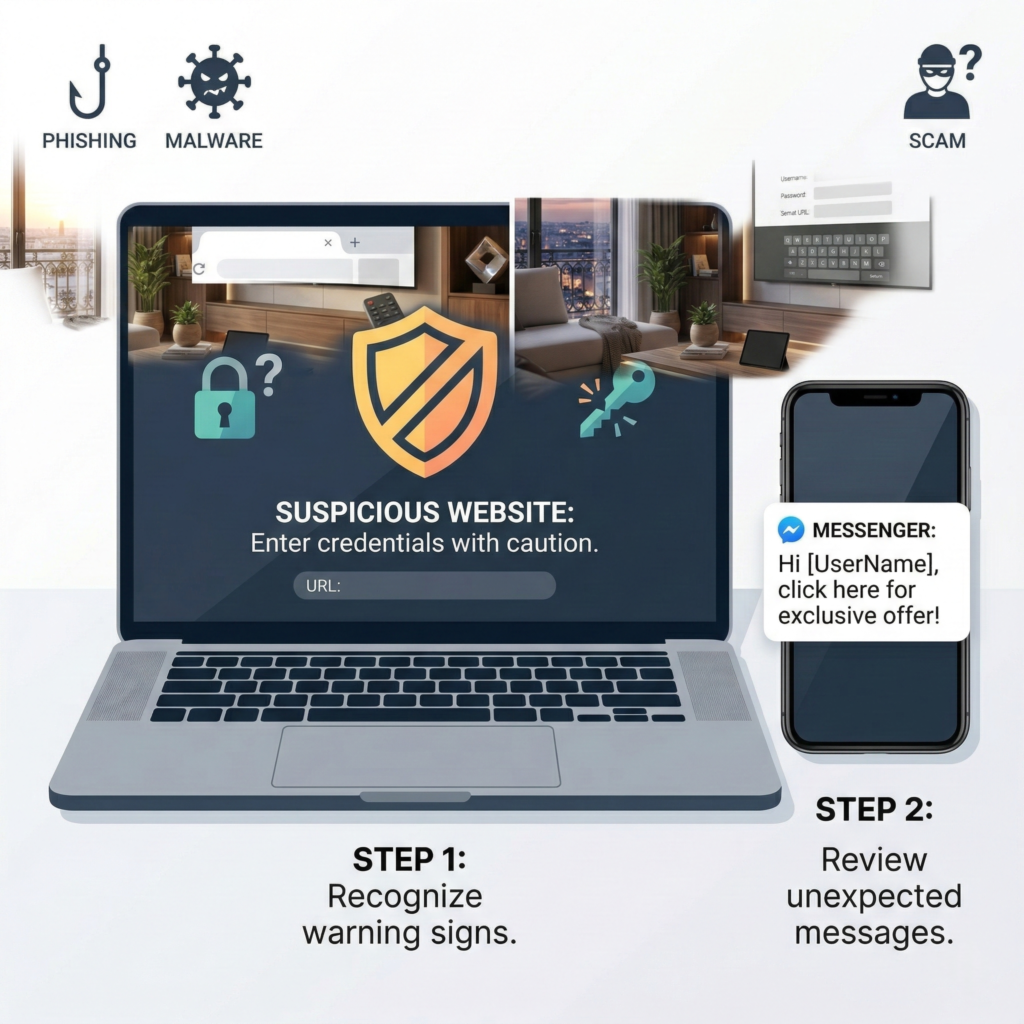
Avoiding fake IPTV websites is important because many unofficial pages attempt to imitate legitimate services and collect payments or personal information from users. These sites often look convincing at first glance, using similar names, logos, or promotional offers to attract visitors. For anyone searching for Apollo Group IPTV online, the safest approach is to verify the website carefully before creating an account or making any payment.
One of the most common warning signs is unrealistic pricing or promotional claims. Scam websites sometimes advertise extremely low subscription prices or lifetime access offers that seem too good to be true. In reality, legitimate IPTV services usually follow structured subscription models based on monthly or multi-month plans. If a website promises unlimited access for an unusually small one-time fee, it is often a signal that the page may not be trustworthy. Taking a moment to compare the pricing structure with known plans can help users avoid suspicious offers.
Another useful habit is checking how the website handles communication and support. Authentic service pages typically provide clear contact options, support instructions, and consistent account information. Fake pages may rely heavily on anonymous messaging accounts or push users toward quick payments without explaining how the service works. For example, a user who receives a message encouraging immediate payment without providing setup instructions or account details should treat that situation cautiously.
As suggested in the safety example above, reviewing a few simple details before subscribing can significantly reduce the risk of using a fake site. Users often check the domain name carefully, confirm that the page explains setup steps clearly, and verify that the subscription process follows a logical flow. Taking a few minutes to confirm these details helps ensure that viewers access the correct platform and avoid unnecessary issues with payments or account access.
Quick takeaway:
Verifying the correct website helps prevent payment or account problems.
Fake IPTV websites often copy branding and offer unrealistic deals.
Always review pricing, contact information, and setup instructions carefully.
Common scam signs
Recognizing common scam signs can help users avoid fake IPTV websites and protect both their payments and personal information. Many scam pages are designed to look legitimate, often copying branding, layouts, or service descriptions from real providers. However, a few warning signs usually appear when you examine the website more closely. Paying attention to these details before subscribing can prevent problems such as non-working accounts, missing login details, or unreliable service access.
One of the most frequent red flags is unrealistic pricing or exaggerated promises. Scam websites sometimes promote extremely cheap subscriptions, lifetime access offers, or unlimited devices for a one-time payment. While these offers may sound attractive, they often indicate that the site is not trustworthy. Legitimate IPTV services typically follow structured subscription models with clear durations and device limits. If a website advertises deals that seem far below typical pricing or promises features without explaining how they work, it is usually worth investigating further before proceeding.
Another warning sign involves unclear setup instructions or missing service details. Genuine providers usually explain how the service works, including compatible devices, IPTV apps, and basic setup steps. Scam websites may skip these explanations entirely and focus only on collecting payment quickly. For example, a user might encounter a page that pushes for immediate purchase but provides no clear information about login credentials, device compatibility, or how channels will be accessed. This lack of transparency often signals that the service may not function as advertised.
As illustrated in the safety example above, communication methods can also reveal whether a site is trustworthy. Scam platforms sometimes rely heavily on anonymous messaging channels or pressure users to send payments without proper confirmation. A reliable service normally provides structured instructions, clear support options, and an organized subscription process. Taking a moment to review the website carefully—checking pricing explanations, setup information, and contact details—can help users avoid many common IPTV scams.
Quick takeaway:
- Extremely cheap prices or lifetime offers are common scam indicators.
- Lack of setup instructions or service details can signal an unreliable site.
- Trustworthy services usually provide clear pricing, support, and account information.
How to verify a legitimate provider
Verifying a legitimate IPTV provider starts with carefully checking the website and the information it provides before creating an account or making any payment. Because many fake services attempt to imitate real platforms, it is important to confirm that the provider offers clear details about subscriptions, supported devices, and the setup process. A trustworthy service usually explains how the platform works, what users receive after subscribing, and how to access channels through compatible apps.
One of the first things users should review is the structure of the website itself. Legitimate providers generally present organized pages that explain the service features, supported devices, and how the setup process works. For example, a reliable site might include sections describing live channels, video-on-demand libraries, and instructions for installing IPTV apps on devices like Firestick, smart TVs, or smartphones. If a website contains only promotional text without clear explanations of how the service operates, it may be worth investigating further before subscribing.
Another useful step is checking whether the provider clearly explains subscription plans and connection limits. Reliable services usually outline how long each plan lasts and how many devices can stream at the same time. This transparency helps users understand exactly what they are purchasing and how the service will function in their household. For instance, a viewer might confirm that a plan supports multiple devices if several people in the home want to watch different channels simultaneously.
As illustrated in the safety example above, it is also helpful to confirm that the service provides consistent instructions and a logical account process. A legitimate platform normally guides users through a clear sequence: reviewing plans, creating an account, receiving login details, and setting up the IPTV player app. If a website skips these steps and focuses mainly on fast payments without explaining the setup or service structure, it may not be reliable. Taking a few minutes to review these details can help ensure that users choose a provider that offers a stable and transparent streaming experience.
Quick takeaway:
- Check whether the website clearly explains the service features and setup process.
- Legitimate providers usually present structured subscription plans and device limits.
- A transparent account process is often a good sign of a reliable IPTV platform.